

Legal Key Presents Poster at the Together for Hope 2025 Conference
Legal
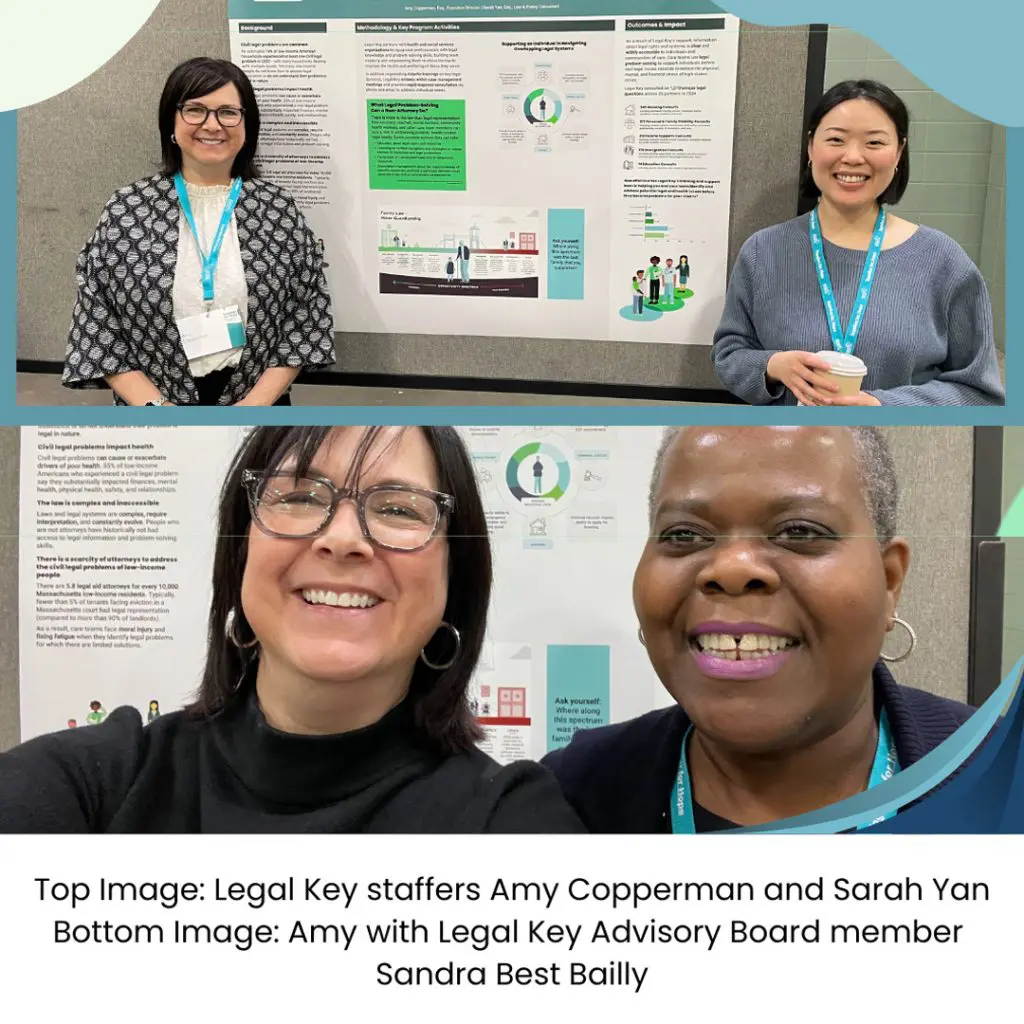
Legal Key was thrilled to attend the Together for Hope 2025 conference in Worcester earlier this month hosted by the Grayken Center for Addiction at Boston Medical Center. Our poster, How to Utilize Legal Problem Solving to Support Patients with Substance Use Disorder, was very well received. There was so much great information to take in, and the speakers and performers were an inspiration.
We look forward to incorporating what we learned into our work supporting partners who serve patients with substance use disorder.

Legal Key’s April Unlocking Access® training for partners was titled First 100 Days. We presented on some of the changes in federal law and policy in recent months, and how those changes are impacting health and safety. Our Law & Policy Consultant, Rebecca Kislak, wrote our latest blog post as a companion to the training, where she highlights how to navigate these rapid changes.
Legal Key to Present at Root Cause Coalition’s Voices of Health Equity Series
Legal Key, along with our partner The Children’s Trust and the team at Tufts Interdisciplinary Evaluation Research (TIER), is participating in the Root Cause Coalition’s Voices of Health Equity speaker series on May 9. Our session, Expanding Family Supports with Legal Problem-Solving: How a Home Visiting Program and a Medical Legal Partnership Created a Unique Service Delivery Model, will cover recent findings about how Legal Key’s work impacts care teams and those they serve. It will be hosted online from 12-1p, and there is still time to register to attend!

test
In Case You Missed It! Check out our 2024 Year In Review for a roundup of last year’s work. Each member of the Legal Key team contributed so much to our success, and we carry that sense of gratitude and purpose with us into 2025.

Housing Updates in Massachusetts and Rhode Island
| Massachusetts Accessory Dwelling Units (ADUs) (also known as in-law apartments) are now easier to build, by right. This new provision in state law will let property owners zoned for single family homes build a second unit up to 900 square feet either attached or free-standing. This change will open up pathways for new, affordable housing. |

| Rhode Island The Rhode Island Department of Health has created a searchable public database that allows anyone to access contact information for landlords and property managers, as well as basic information about each rental property, such as certificates of deleading. |

© 2025 Third Sector New England, Inc., on behalf of Legal Key, All Rights Reserved
Legal Key Partnership for Health and Justice envisions a society where information about legal rights and systems is widely accessible and used to help people to thrive. To realize this vision, Legal Key’s mission is to create access to legal knowledge for health and social service sectors and empowers those communities to use legal problem-solving to improve wellbeing. Through legal education, workforce support and social care program design, Legal Key impacts systems, care professionals, and the individuals they serve.
Legal Key is a fiscally sponsored organization of Third Sector New England.
Information contained in this newsletter is for educational purposes only and does not constitute legal advice or establish an attorney-client relationship.