For immigrants and mixed status families, immigration status is a threshold eligibility factor for many health-promoting resources. This can make it hard for care teams to offer families support that can meet their immediate goals. The following resources are available to all people, regardless of immigration status.

MA – Resources Available to People Regardless of Immigration Status
Access to this resource is limited to Unlocking Access subscribers. These partners can access materials designed to help communities of care become stronger partners in problem-solving with the people they serve.
Access to this resource is limited to Unlocking Access subscribers. These partners can access materials designed to help communities of care become stronger partners in problem-solving with the people they serve.
MLPB’s Aging and Health Related Social Needs (HRSN) Learning-and-Action Lab (the “Lab”) is a two-phased initiative designed to inform and improve clinic-based HRSN screening, referral, and problem-solving strategies impacting older adults who live in Rhode Island. Through generous funding from the Blue Cross & Blue Shield of Rhode Island Community Health Fund (BCBSRI’s advised fund at the Rhode Island Foundation), and with programmatic support from the Care Transformation Collaborative of Rhode Island (CTC-RI), the Lab explores how the screening experience of RI-based older adults (age 55 and over) can be enhanced, and how care teams and insurers can be more responsive to patients’ goals.
Phase 1 centered the perspectives of Rhode Islanders with lived experience and non-medical professional expertise to identify key priorities among this population. Phase 2 integrated members of clinical practices in Rhode Island to identify shared insights and develop concrete recommendations to improve HRSN screening, referral, and problem solving.
MLPB’s Aging and Health Related Social Needs (HRSN) Learning-and-Action Lab (the “Lab”) is a two-phased initiative designed to inform and improve clinic-based HRSN screening, referral, and problem-solving strategies impacting older adults who live in Rhode Island. Through generous funding from the Blue Cross & Blue Shield of Rhode Island* the Lab explores how the screening experience of RI-based older adults (age 55 and over) can be enhanced, and how care teams and insurers can be more responsive to patients’ goals.
*Support provided through the Blue Cross & Blue Shield of Rhode Island Community Health donor advised fund at the Rhode Island Foundation.
This month a new DULCE paper was published in Pediatrics, the official journal of the American Academy of Pediatrics. Entitled Cross-Sector Approach Expands Screening and Addresses Health-Related Social Needs in Primary Care, the paper presents data collected at 5 DULCE sites that shows:
- an increase in family engagement with well-child visits; and
- reliable detection of, and responses to, health-related social needs disclosed by families.
Read the paper lead-authored by MaryCatherine Arbour here, as well as a companion blog post published by the Center for the Study of Social Policy.
Launched at the height of the COVID-19 pandemic, Legal Key’s Digital Digest is a space that spotlights frequent changes in laws and policies that impact health.
The Digital Digest is free and accessible to anyone! It highlights changes in state and federal law related to health-harming legal needs in three categories: federal law, Massachusetts law, and Rhode Island law. Our goal is to translate complicated legal topics into easily understood language, illustrating how the law impacts people’s lives. Where possible, the Digest offers concrete steps that anyone, including care teams, can take to address legal needs.
The information in the Digest is for educational purposes only, and should not be construed as legal advice.
Please click below for updates:



(2018)
Six concrete recommendations for a strengths-based approach to social need screening with families, to minimize potential harm and unintended consequences.
Published by CSSP, co-authored by Renee Boynton-Jarrett, MD, ScD.
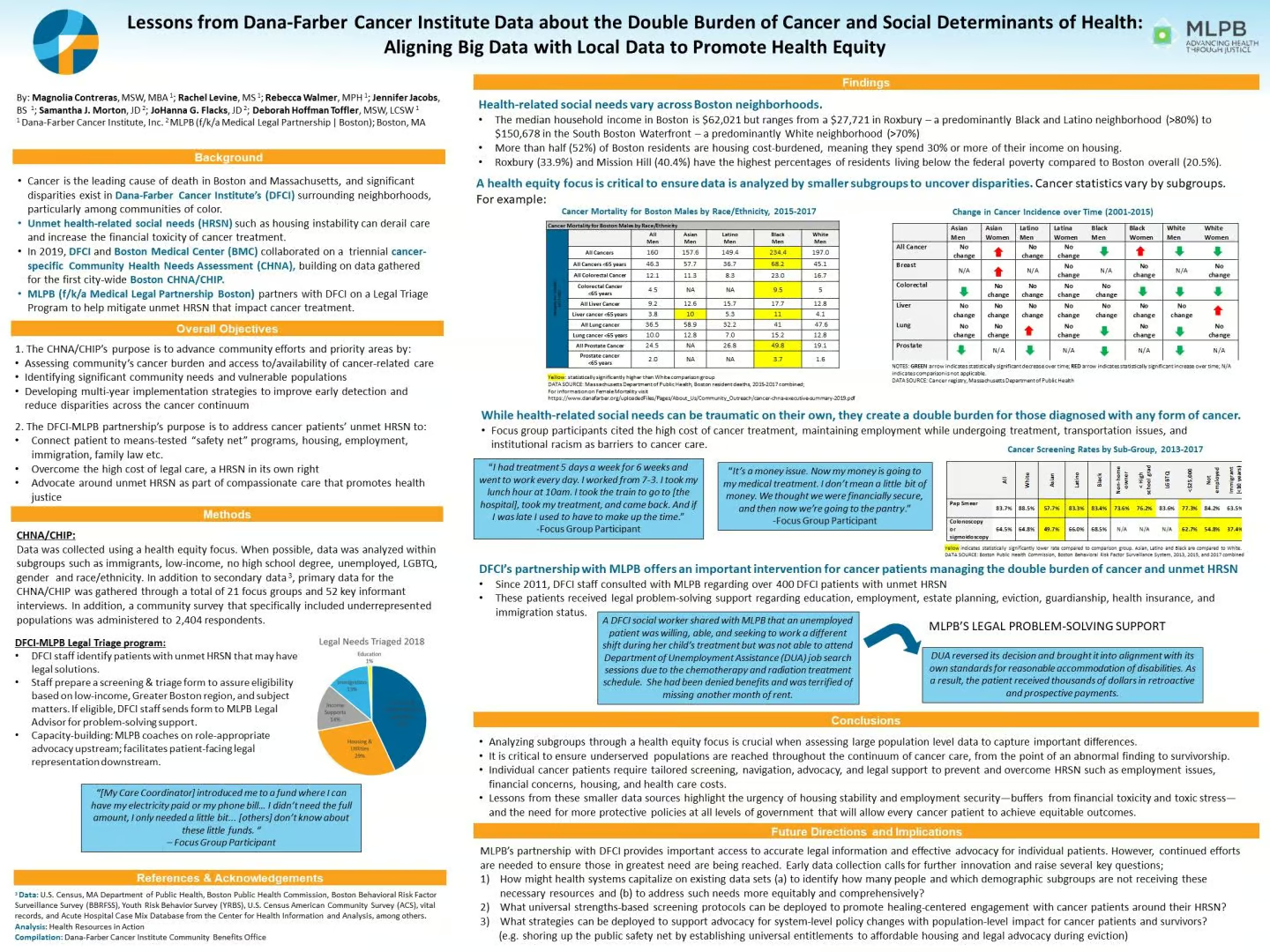
Burden of socio-legal concerns among vulnerable patients seeking cancer care services at an urban safety-net hospital: a cross-sectional survey (2016)
Cross-sectional survey of cancer care patients demonstrates need for innovation in cancer care delivery to address socio-legal concerns.
Patients undergoing cancer care treatment require tailored screening, navigation, and legal problem-solving to address health-related social needs.
A Strengths-Based Approach to Screening Families for Health-Related Social Needs
Six concrete recommendations for a strengths-based approach to social need screening with families, intending to minimize potential harm and unintended consequences.