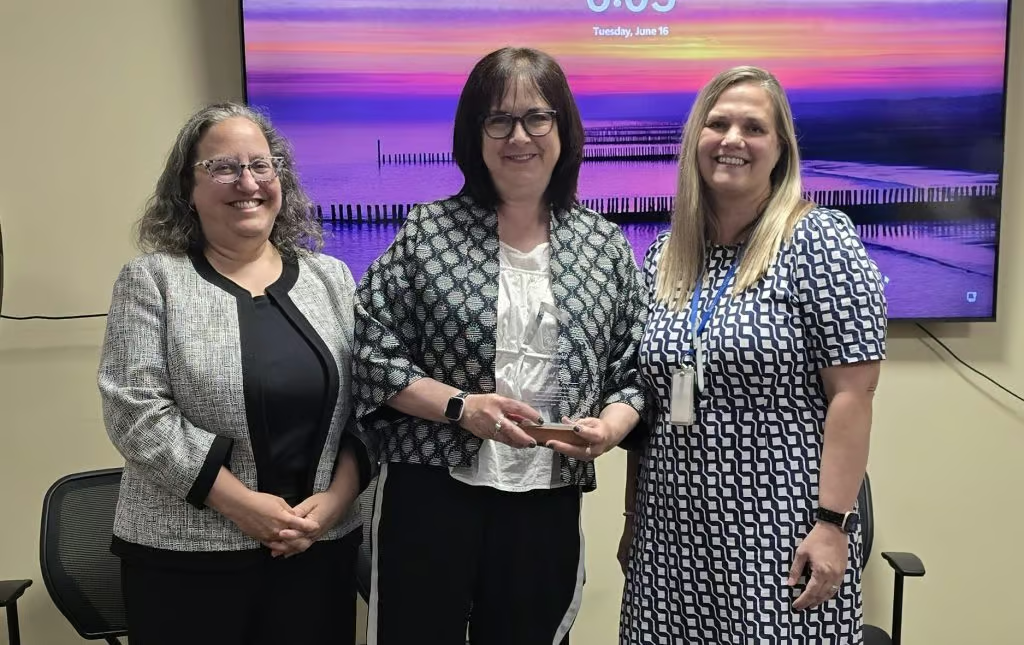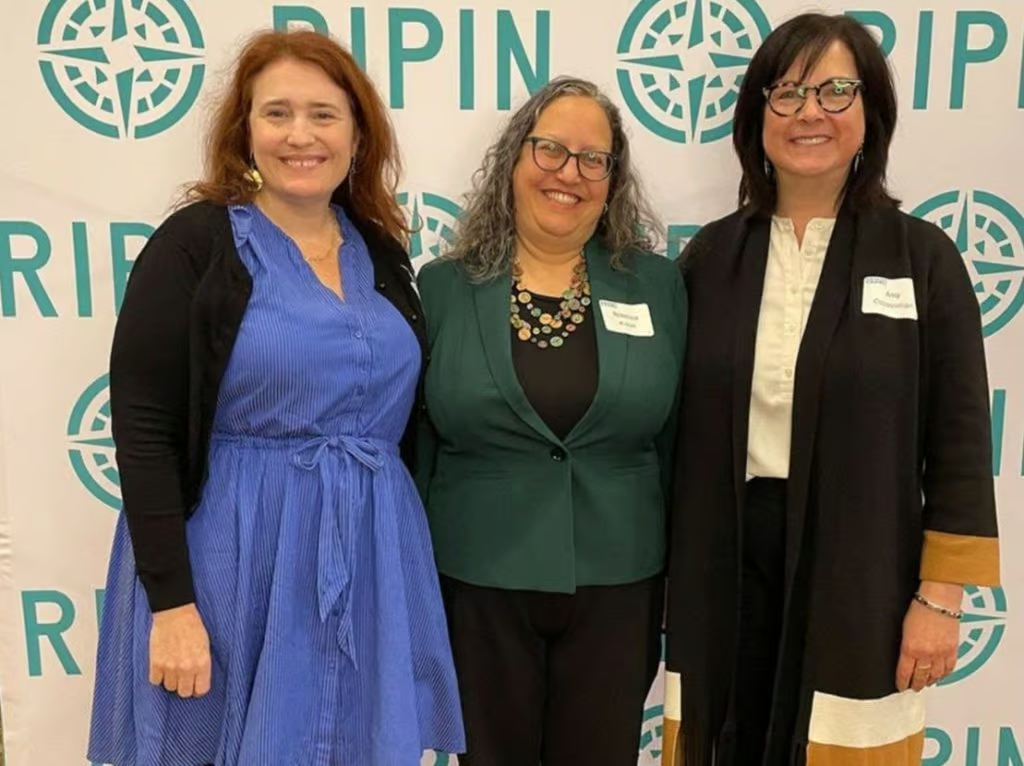

We are happy to announce that three of our Advisory Board members are renewing their terms this fall: Dr. Cheryl Clark, Vice-Chair of the Advisory Board and Chair of our HR & Governance Committee; Deborah O’Brien, member of our HR & Governance Committee, and Sandra Best Bailly, member of our Strategy Committee. Their contributions are mighty, and we are grateful for the opportunity to continue this work together.

We also want to thank Carinel LeGrand for her service on our Advisory Board since 2023. Carinel brought an important perspective to our work and generously contributed her time and expertise as a member of our Strategy Committee. She will be stepping off this fall to pursue other opportunities — we will miss her!


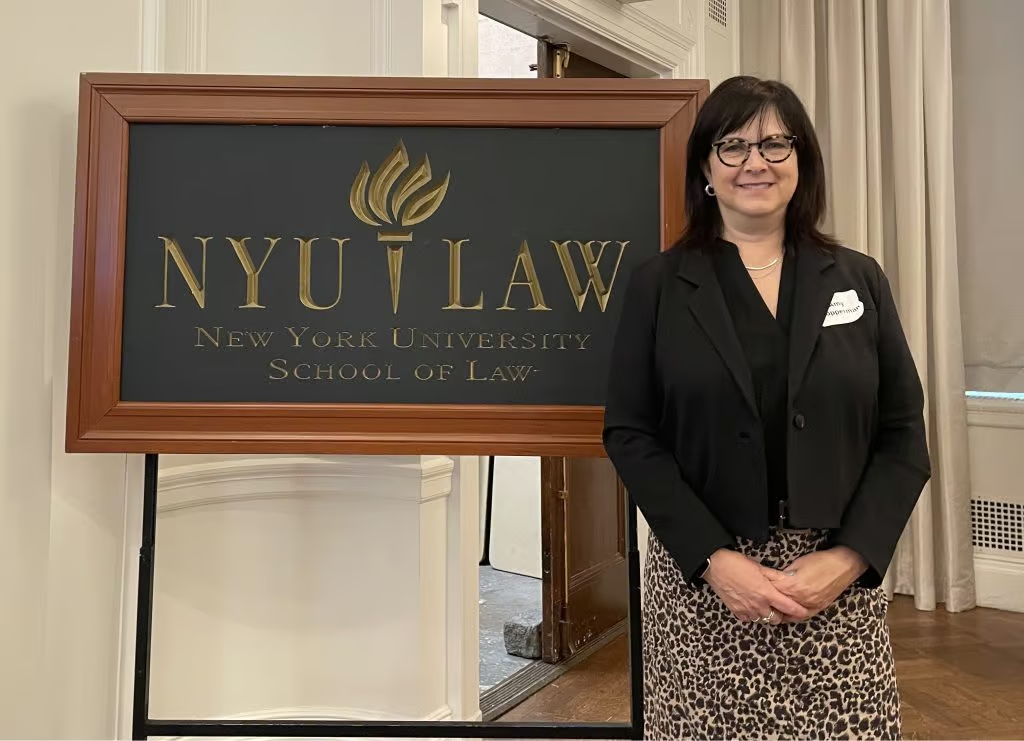
We are thrilled that Legal Key will host Linda Fentiman through the Massachusetts Access to Justice Fellows Program for the coming year.
Linda is Professor Emerita at the Haub School of Law at Pace University in New York. For nearly four decades she has taught and written about criminal law and health law, focusing on issues of maternal and child health, mental disability, public health, and reproductive health care.
Linda began her teaching career at Suffolk University Law School. She has also taught at Columbia Law School, the University of Houston Law Center, and the University of Warsaw. She holds a J.D. from SUNY Buffalo and an L.L.M. from Harvard. Before entering academia, Linda practiced criminal law in California and environmental law in Washington, D.C.
We are grateful to the Lawyers Clearinghouse for connecting us to Linda, and we are looking forward to drawing on her vast expertise and fresh perspectives to help make our educational and policy work even stronger.

In March 2026, the Legal Services Center of Harvard Law School submitted a letter of amicus curiae on Legal Key’s behalf in the appeal of PRI Glen Grove, LLC vs. Elaine Laffan. This case involved an eviction of a disabled tenant, and whether the trial court properly considered the reasonable accommodation defense that the tenant made. In September, the Appeals Court decided in favor of the tenant and sent the case back to the lower court for reconsideration.
The decision is an important affirmation of the core principles of disability law and reasonable accommodations as they apply to housing. Legal Key participated in the amicus letter because we consistently receive consult questions about both housing and disability law issues, and we know that these issues are critically important to our partner organizations and those they serve. We are grateful to Deena Zakim at the Legal Services Center for her excellent work on the letter.


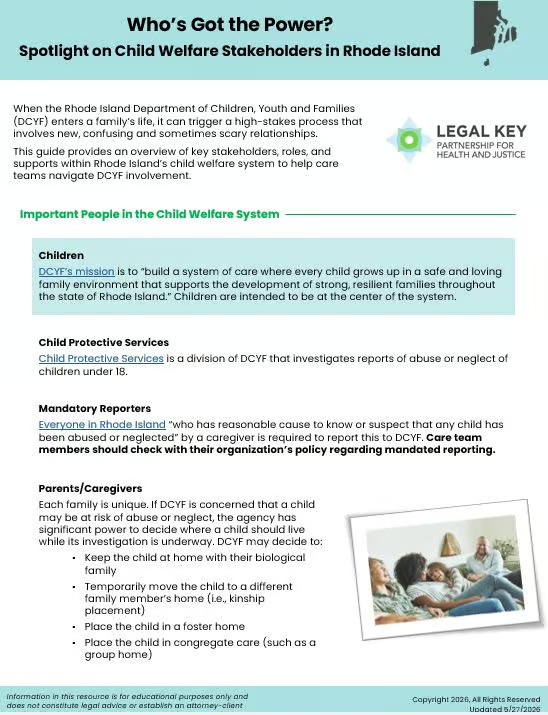
Legal Key creates a range of educational tools that demystify common health-related legal needs, all available on our Unlocking Access® Hub. We update them regularly to keep up with changes in law and practice.
One of our recently updated guides, Who’s Got the Power? Spotlight on Child Welfare Stakeholders in Rhode Island, provides an overview of critical information care teams need to navigate Rhode Island’s child welfare system.
Even though most of our Hub resources are only available to subscribers, this guide will be publicly available for a limited time. Check it out!

Legal Key’s Digital Digest is a space spotlighting changes to laws that impact health, and covers a wide range of categories including employment, housing, immigration, and more. Visit the Massachusetts, Rhode Island, and federal pages regularly to learn about updates in your area.
Our democracy’s function depends on knowledge about how our legal systems work.
Consider donating to Legal Key with an individual contribution or through a Donor Advised Fund today.

© 2026 Third Sector New England, Inc., on behalf of Legal Key, All Rights Reserved
Legal Key Partnership for Health and Justice envisions a society where information about legal rights and systems is widely accessible and used to help people to thrive. To realize this vision, Legal Key’s mission is to create access to legal knowledge for health and social service sectors and empowers those communities to use legal problem-solving to improve wellbeing. Through legal education, workforce support and social care program design, Legal Key impacts systems, care professionals, and the individuals they serve.
Legal Key is a fiscally sponsored project of Third Sector New England.
Information contained in this newsletter is for educational purposes only and does not constitute legal advice or establish an attorney-client relationship.